An interesting engineering challenge
A two-hour cardboard boat build, a 25-metre swim, and an unlikely finish.
With the school year drawing to a close, everyone has started to realise that we'll soon be heading our separate ways for two long months. Before that happened, however, our STEM teachers decided to give us one final challenge: build a cardboard boat capable of carrying a person across a 25-metre swimming pool (spicy!)
It sounded simple enough on paper. In reality, it was a wonderfully ridiculous engineering problem.
The challenge
We were split into our school houses and given roughly two hours to design and construct our boats. At first, I was sceptical. Cardboard and water have never exactly been known for getting along, and although we had plenty of material, time was definitely not on our side.
After some quick research and brainstorming, we settled on a fairly conventional design. The hull would have a regular shape, reinforced with two beams running along the sides to improve rigidity and prevent the structure from collapsing under load. It wasn't flashy, but it seemed practical, and practical felt like the safest option when your boat was literally made of cardboard.
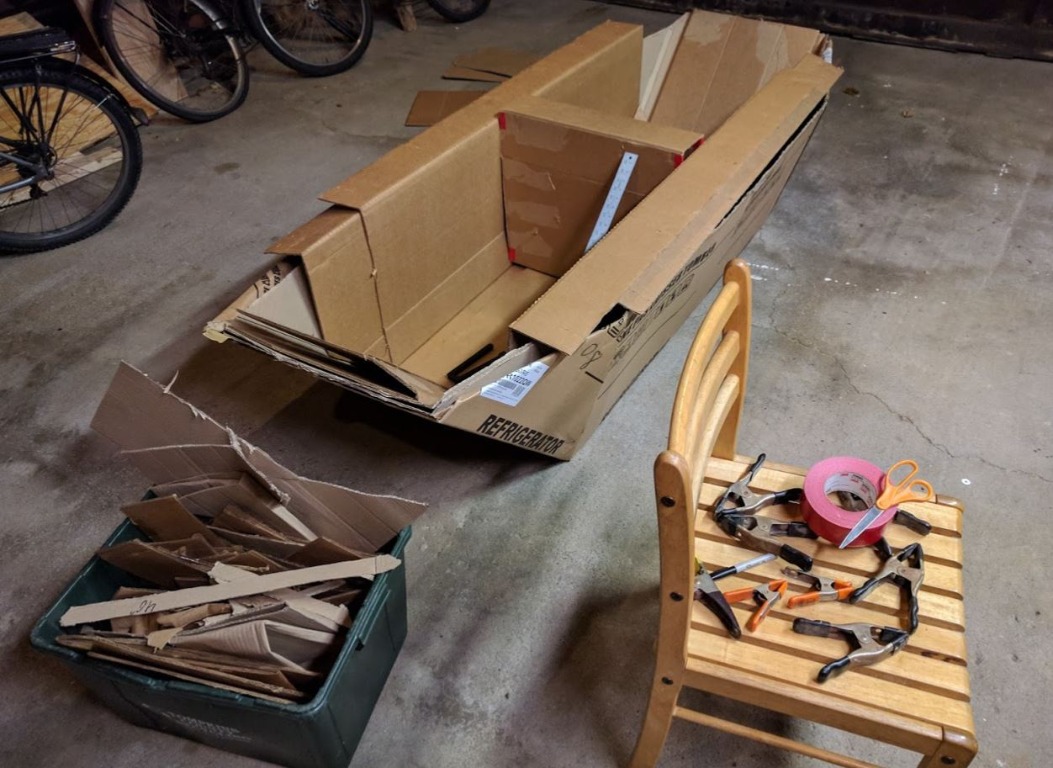
The workshop quickly descended into organised chaos.
Some members measured and plotted dimensions onto sheets of cardboard. Others cut panels, assembled supports, and suggested ways to strengthen weak points. A dedicated group worked on constructing a mast because, naturally, if we were building a boat, we were going to build one with style (and also to assert dominance over other houses).
I had the opportunity to lead the project, coordinating the different groups and helping keep everything moving as the clock ticked down. Despite the pressure, it was incredible to watch everyone contribute. Each person found a role, and slowly our pile of cardboard transformed into something that vaguely resembled a seaworthy vessel.
As the deadline approached, desperation became an engineering strategy.
We scavenged the last remaining roll of tape and covered every seam, corner, and suspicious-looking gap we could find. Meanwhile, several team members were crouched underneath the boat, physically holding sections together while others frantically taped from above. It looked less like a professional shipyard and more like a pit crew trying to keep a race car together for one final lap (haha).
The aftermath
Towards the final period, we rushed to the swimming pool, where (proudly) we presented our final product to awed faces.
When the final bell approached, we carried our creation to the swimming pool.
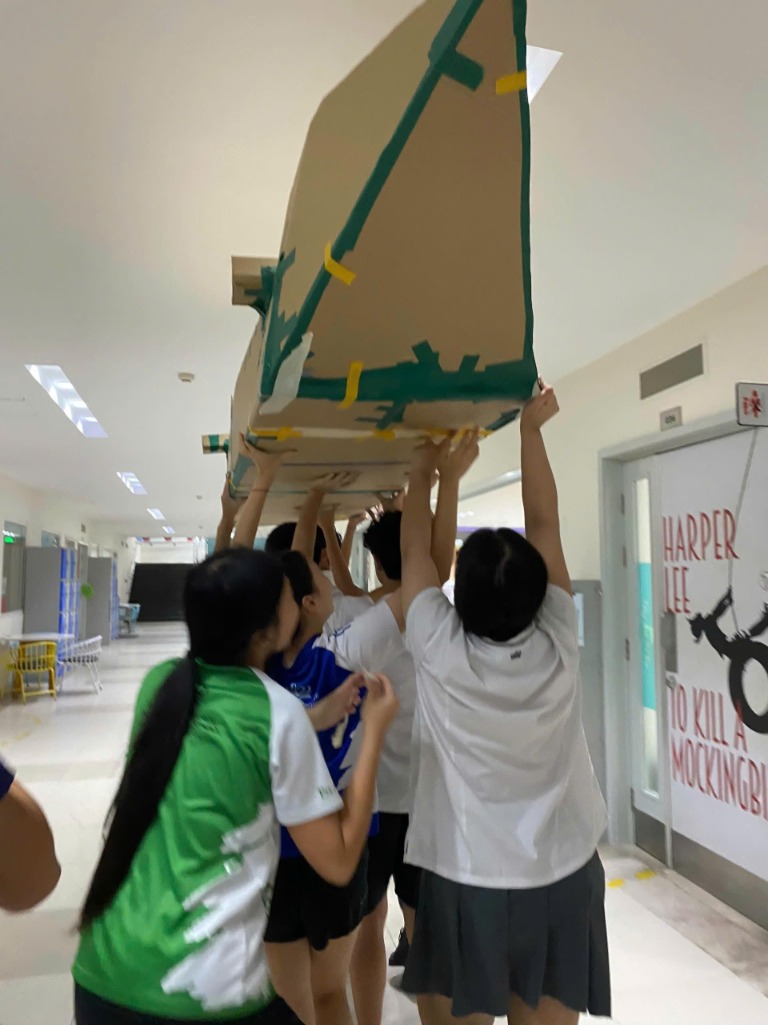
One by one, the teams tested their boats while dozens of students and teachers watched from the sidelines. By the time our turn arrived, more than eighty people were gathered around the pool. We were the last team to go.
Standing there, looking at the boat we'd spent two frantic hours building, I felt a mixture of pride and nerves. Somehow, against all odds, it actually looked like it might work. So, after a teammate climbed in and started paddling, I felt relieved because we were already three quarters through and it didn't look like that boat was going to fail at all.
Until five metres left to the finish line - when the boat finally surrendered to physics. Water rushed in, the hull gave way, and our carefully engineered vessel began its slow descent to the bottom of the pool.
But the teammate that was in the boat managed to get to the end smartly, and to our surprise, we won! (Thank you a lot, if you're reading).
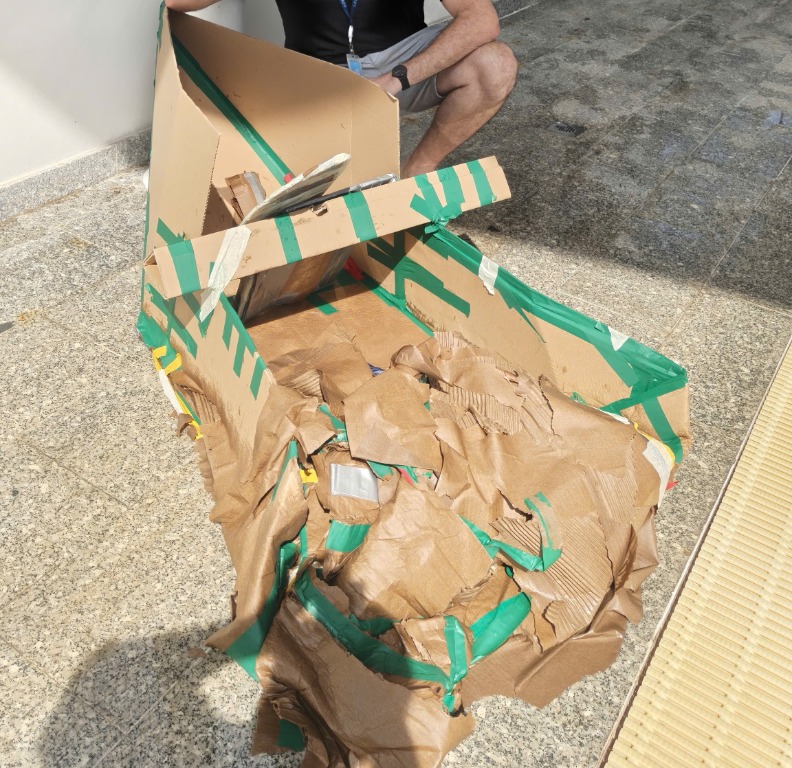
Looking back, the victory was great, but it wasn't the best part of the experience. What I'll remember most is the collaboration. In just a couple of hours, a large group of students came together, solved problems under pressure, adapted when things went wrong, and built something that actually worked, at least long enough to matter.
For a project made entirely of cardboard and tape, it turned out to be one of the most memorable engineering experiences I've ever had.